Dimensional Metamaterials - Engineering Space Itself
Beyond Three Dimensions
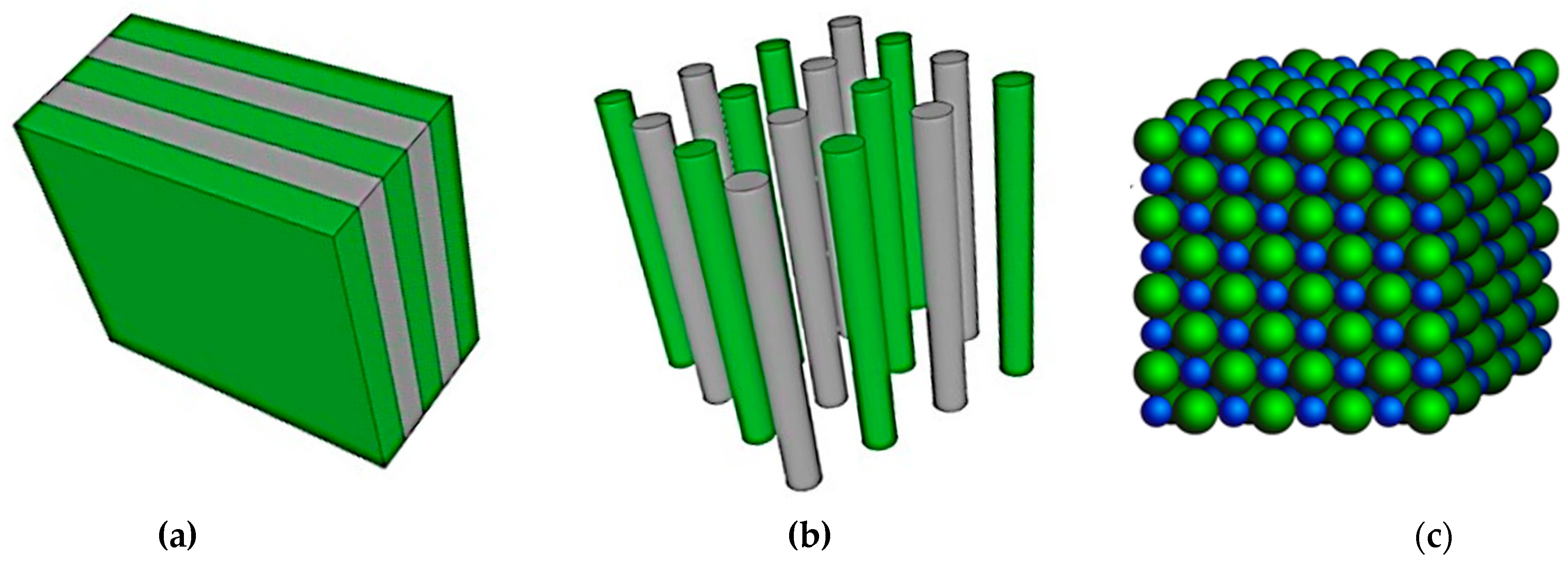
2025 research has achieved the creation of metamaterials with effectively four-dimensional properties - structures that manipulate space in ways that seem impossible from our three-dimensional perspective. These materials don't just occupy space; they reshape the geometry of space around them.
Spatial Programming
By creating carefully designed patterns of matter and energy at microscopic scales, researchers have learned to program the curvature and topology of local spacetime. These dimensional metamaterials can make objects appear to exist in impossible geometric configurations, create spaces that are larger inside than outside, or establish regions where the normal rules of three-dimensional geometry don't apply.
The breakthrough involves using quantum field effects and controlled gravitational gradients to create what physicists call "effective dimensional spaces" - regions where the mathematical description of space requires more than three dimensions to accurately represent the physical phenomena occurring there.
Impossible Architecture
Dimensional metamaterials enable the construction of architectural spaces with impossible geometries - buildings that are significantly larger inside than their external dimensions would allow, or rooms that connect to each other in ways that violate three-dimensional topology.
This isn't achieved through optical illusion or clever engineering, but through actual manipulation of spatial geometry at the quantum level. The materials create regions of curved spacetime where the shortest path between two points follows non-Euclidean geometry, enabling spatial relationships impossible in flat three-dimensional space.
Hyperspace Manufacturing
The technology opens possibilities for manufacturing processes that occur in effectively higher-dimensional spaces. Complex three-dimensional objects can be fabricated using four-dimensional assembly processes, enabling the creation of structures with internal complexity that would be impossible to achieve through conventional three-dimensional manufacturing.
These processes could create materials with internal structures that exist in spatial configurations impossible to construct or even visualize from a three-dimensional perspective, leading to materials with unprecedented mechanical, optical, and electronic properties.
The Topology Revolution
Perhaps most profoundly, dimensional metamaterials represent humanity's first ability to engineer the topology of spaceManager itself. Rather than simply arranging matter within existing space, we're learning to modify the fundamental geometric properties of space to achieve technological objectives.
This could lead to applications ranging from ultra-efficient transportation systems that use spatial topology to reduce travel distances, to communication networks that operate through higher-dimensional connections, to energy storage systems that use spatial curvature to contain enormous amounts of energy in compact volumes.


Comments
Post a Comment