Foreign Military Bases on US Soil: The Qatar Air Force Deal That Changes Everything | National Security Analysis 2025
The Sovereignty Reversal: Why Foreign Military Bases on American Soil Changes the Global Power Balance Forever
Published: October 11, 2025 | Reading Time: 18 minutes | Category: National Security Analysis
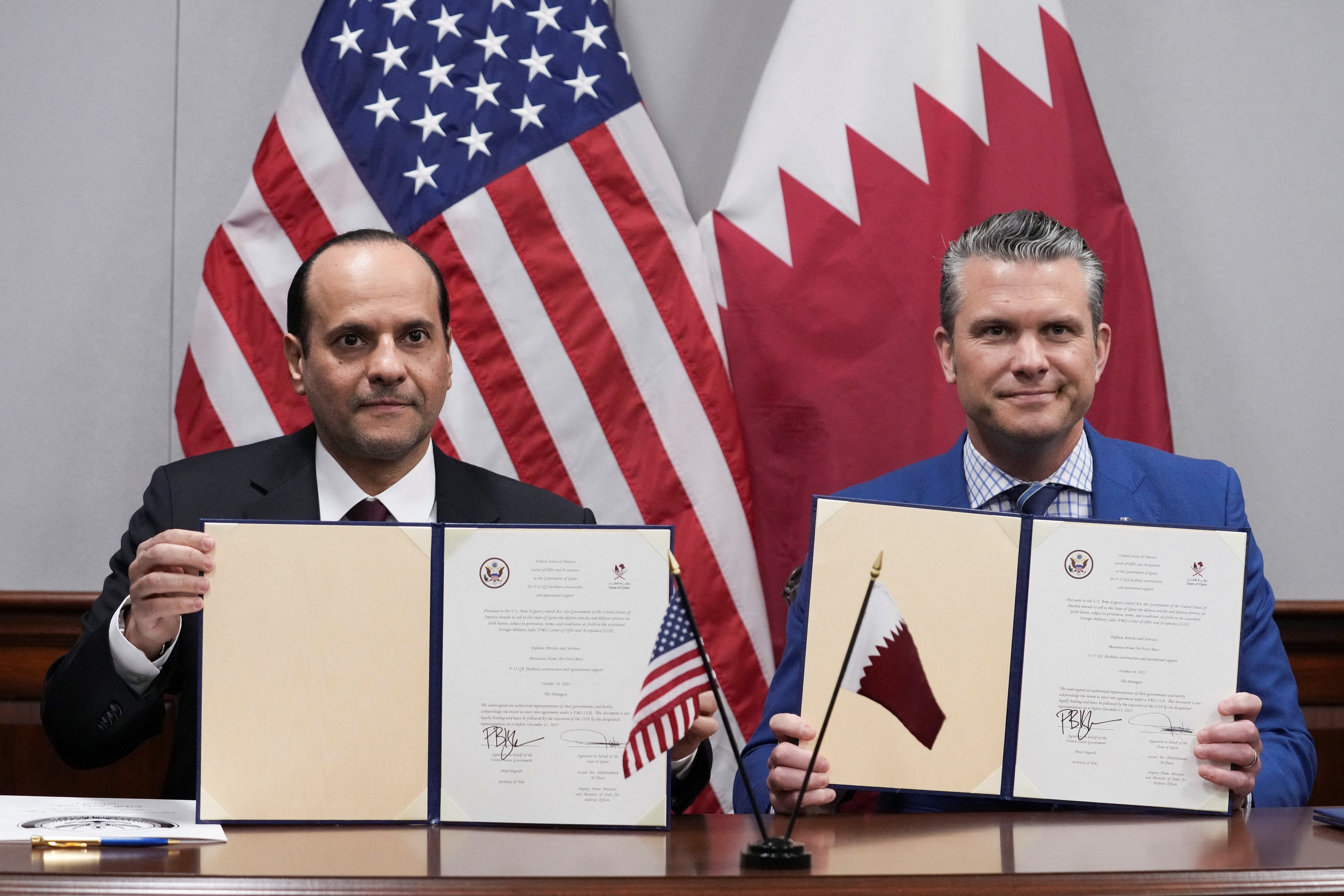
Breaking News Context: Defense Secretary Pete Hegseth announced October 10, 2025 that Qatar will build an air force facility at Mountain Home Air Force Base in Idaho, marking a historic shift in US military policy.
Lead: For the first time in American history, a foreign military will operate a permanent facility on US mainland soil. While the Pentagon frames this as a training partnership, the Qatar Air Force deal in Idaho represents something far more significant: the end of American military exceptionalism and the beginning of a new era where US territory becomes part of the global military real estate market.
The Announcement That Broke 250 Years of Precedent
On October 10, 2025, Defense Secretary Pete Hegseth stood before reporters and announced what would have been unthinkable to every previous generation of American military leadership: "Today, we're announcing a letter of acceptance in building a Qatari Emiri Air Force facility at the Mountain Home Air Force Base in Idaho."
The new facility will host Qatari F-15 fighter jets and pilots, enabling joint training operations with US forces. While Pentagon officials describe this as a routine partnership agreement, military historians and constitutional scholars recognize it as something unprecedented: the first permanent foreign military installation on the continental United States since the nation's founding.
Why This Is Different From Everything Before
The United States has allowed foreign military personnel on American soil before—exchange programs, training exercises, diplomatic security details. But those were always temporary, always under complete US control, and never involved foreign sovereign military installations with their own command structures, personnel, and operational authority.
The Qatar facility represents something fundamentally different:
- Permanent Infrastructure: This isn't a temporary training program—it's a physical facility that Qatar owns and operates
- Sovereign Military Presence: Qatari military personnel will work under Qatari command structure, not US authority
- Armed Combat Aircraft: F-15 fighters are frontline combat aircraft, not training planes
- Operational Capability: The facility enables combat-ready operations, not just training exercises
- Precedent Setting: Once one foreign military has a US base, the diplomatic framework exists for others
The 800-Base Empire Comes Home
The United States currently operates approximately 800 military installations in more than 70 countries worldwide—a military footprint unmatched in human history. American military bases circle the globe from Germany to Japan, from Diego Garcia to Djibouti, from South Korea to Qatar itself.
For decades, this asymmetry was accepted as normal: America projects military power globally while remaining inviolate from foreign military presence on its own territory. The Qatar deal shatters this arrangement.
The Reciprocity Principle
Once America accepts foreign military bases on its soil, every country hosting US bases gains powerful negotiating leverage. The diplomatic conversations that were previously one-sided ("allow us to maintain bases in your country") become reciprocal negotiations ("if you want bases in our country, we need equivalent access to yours").
Consider the implications:
- Germany: Hosts 21 major US military installations—could now demand German Luftwaffe facilities in the United States
- Japan: Hosts 23 US military bases—could request Japanese Self-Defense Force installations on US territory
- South Korea: Hosts 15 major US bases—could seek reciprocal facilities in America
- United Kingdom: Hosts multiple US airbases—could request RAF installations in the US
- Italy: Hosts significant US naval and air force presence—could seek Italian military facilities in America
The Qatar precedent transforms these from theoretical possibilities into legitimate diplomatic requests with existing framework and justification.
The National Security Paradox
Pentagon officials justify the Qatar facility as enhancing national security through allied cooperation and interoperability. But this creates a profound paradox that military strategists are beginning to grapple with:
The Trust-But-Verify Problem
US military doctrine has always maintained absolute control over American territory precisely because security requires verification, not just trust. Even the closest allies don't get unrestricted access to American military facilities because:
- Intelligence Security: Foreign personnel on US bases create potential intelligence vulnerabilities
- Operational Security: Foreign military operations on US soil complicate command and control
- Political Stability: Ally relationships change—bases outlast political alignments
- Technology Protection: US military technology and procedures become observable by foreign personnel
- Legal Jurisdiction: Status of forces agreements create legal gray zones on American soil
The Qatar Complication
Qatar specifically presents complex considerations that make this precedent particularly concerning:
The Al Jazeera Factor: Qatar funds Al Jazeera, which has published content critical of US policies and intelligence operations. A sovereign nation that owns and operates media outlets critical of the US now has military installations on American soil.
The Hamas Connection: Qatar has hosted Hamas leadership and served as intermediary in Gaza negotiations. While useful diplomatically, this relationship means a nation negotiating with designated terrorist organizations now operates military facilities in Idaho.
The Iran Proximity: Qatar maintains complex relationships with Iran, including shared natural gas fields in the Persian Gulf. This creates potential conflicts of interest when Qatari military personnel have access to US bases and operations.
The Regional Politics: Qatar's complicated relationship with Saudi Arabia, UAE, and other Gulf states means regional Middle Eastern politics now have physical presence and potential influence within American borders.
The Constitutional Questions Nobody's Asking
Legal scholars are beginning to raise fundamental constitutional questions about foreign military bases on US soil:
Article I, Section 8 Implications
The Constitution grants Congress the power "To raise and support Armies" and "To provide and maintain a Navy." But does it grant the executive branch power to allow foreign militaries to establish permanent installations on US territory?
This has never been tested because it's never happened before. The Qatar deal may require constitutional interpretation of powers that the founders never explicitly addressed because they never imagined this scenario.
State Sovereignty Questions
Idaho's state government was not consulted about Qatar establishing military facilities within state borders. This raises questions about:
- Does federal government have authority to allow foreign military presence in states without state consent?
- What jurisdiction do state laws have over foreign military personnel on Idaho soil?
- Can states refuse foreign military installations within their borders?
- What rights do Idaho citizens have regarding foreign military operations near their communities?
The Status of Forces Agreement Gap
When US military operates abroad, Status of Forces Agreements (SOFAs) define legal jurisdiction over military personnel. But these agreements were designed for US personnel in foreign countries, not foreign personnel in America.
Critical questions remain unanswered:
- Are Qatari military personnel subject to US law or Qatari military justice?
- If Qatari personnel commit crimes in Idaho, which court system has jurisdiction?
- Can US law enforcement enter Qatari military facilities without permission?
- What happens if Qatari and US interests conflict during a regional crisis?
The Political Earthquake
The Qatar announcement has created unusual political dynamics, with opposition emerging from unexpected quarters:
The MAGA Rebellion
Supporters of President Trump, who approved the deal, are expressing fierce opposition—creating rare daylight between Trump and his base. Social media exploded with accusations of "betrayal" and "selling out America," with prominent MAGA influencers calling the deal a violation of America First principles.
This internal conservative conflict reveals deeper tensions about what "America First" actually means when it conflicts with strategic partnerships and business deals.
The Progressive Discomfort
Progressive critics uncomfortable with US military expansionism abroad find themselves in the awkward position of defending American military sovereignty—a typically conservative position.
This role reversal highlights how the Qatar deal scrambles traditional political alignments around military and foreign policy issues.
The Bipartisan Concern
Perhaps most notably, concern about the precedent-setting nature of this deal crosses partisan lines. Military veterans, constitutional scholars, and national security professionals from both parties are asking whether short-term strategic benefits justify long-term structural changes to American military sovereignty.
The Economic Angle Nobody Mentions
While national security concerns dominate discussion, the Qatar deal has significant economic dimensions that remain underexplored:
The Arms Sale Connection
Qatar purchasing F-15 fighters from Boeing represents billions in US defense exports. The Idaho base deal provides infrastructure to support those aircraft—essentially, American taxpayers subsidizing facilities that enable more arms sales to Qatar.
This creates a concerning dynamic where foreign military presence on US soil becomes part of defense export packages, turning American territory into sweeteners for international arms deals.
The Real Estate Precedent
If military facilities become negotiable assets in international deals, US territory essentially enters the global military real estate market. Future agreements might include:
- Saudi Arabia seeking facilities in exchange for defense contracts
- UAE requesting bases as part of broader strategic partnerships
- Israel seeking facilities for IDF training operations
- South Korea requesting bases in exchange for hosting US forces
- NATO allies demanding reciprocal arrangements
The Local Economic Impact
Mountain Home, Idaho will experience economic benefits from Qatari military presence—jobs, spending, infrastructure investment. This creates local political constituencies supporting foreign military presence regardless of broader national security implications.
Future base proposals will come with economic promises that make opposition politically difficult for local representatives, even when national security concerns exist.
The Historical Perspective: How Did We Get Here?
The Qatar deal didn't emerge from nowhere—it represents the culmination of decades-long trends in US military policy:
The Post-Cold War Shift
After the Soviet Union collapsed, US military strategy shifted from preventing adversary expansion to enabling partner capabilities. This "train and equip" approach emphasized building allied military competence through cooperation and integration.
Foreign military training in the US expanded dramatically, creating infrastructure and relationships that made the Qatar deal logistically and diplomatically easier.
The War on Terror Partnerships
Post-9/11 military operations required complex partnerships with Middle Eastern nations. Qatar became a crucial ally, hosting Al Udeid Air Base—the largest US military facility in the Middle East and headquarters for US Central Command forward operations.
This deep military integration with Qatar created mutual dependencies that the Idaho facility extends and solidifies.
The Gulf State Investment Strategy
Qatar and other Gulf states have pursued strategic investments in the US for decades—real estate, businesses, educational institutions, sports franchises. Military facilities represent the next frontier in this integration strategy.
From Qatar's perspective, physical military presence in the US provides security guarantees that financial investments alone cannot—if Qatari military personnel and equipment are on US soil, America has material interest in Qatar's security and stability.
What Comes Next: Scenarios for the Future
Scenario 1: Limited Expansion
The Qatar facility remains an isolated case, with strict limitations preventing broader foreign military presence on US soil. Future administrations treat this as unique exception rather than template.
Likelihood: Low. Once the precedent exists, diplomatic pressure for reciprocal arrangements becomes difficult to resist.
Scenario 2: Gradual Normalization
Over the next decade, additional allied nations gain similar arrangements. By 2035, multiple foreign military facilities operate on US soil, but limited to close allies with stringent oversight.
Likelihood: Moderate. This represents the path of least resistance—gradual change that avoids dramatic confrontation.
Scenario 3: Rapid Proliferation
The economic and diplomatic incentives prove too strong to resist. Within five years, dozens of nations operate facilities in the US, fundamentally transforming American military sovereignty.
Likelihood: Moderate-High if economic conditions worsen and defense export incentives become more important.
Scenario 4: Political Reversal
Public opposition or constitutional challenges force cancellation of the Qatar deal and prohibition of future foreign military facilities on US soil.
Likelihood: Low-Moderate. Would require sustained political pressure and possibly Supreme Court intervention.
The International Response: What Other Nations Are Thinking
US-Based Foreign Militaries: Planning Requests
Multiple nations with significant US military presence are now reviewing options for reciprocal arrangements:
Germany: Luftwaffe already trains in the US, but temporary arrangements could become permanent facilities. German defense officials are reportedly discussing proposals with US counterparts.
United Kingdom: RAF has long-standing training relationships with US Air Force. UK defense ministry is evaluating whether formal base arrangements would provide strategic benefits.
Australia: With major US bases in Australia and growing security cooperation, Australian Defence Force may seek training facilities in the US to mirror arrangements.
US-Hosting Nations: Leverage Opportunities
Countries hosting large US military presence see the Qatar deal as changing negotiating dynamics:
Japan: Already renegotiating cost-sharing for US bases in Japan. The Qatar precedent provides leverage for more favorable terms or reciprocal arrangements.
South Korea: Facing pressure to increase host nation support for US forces. Could use Qatar example to argue for reciprocal access to US facilities.
Poland: Recently increased US military presence. May seek reciprocal arrangements as part of broader security integration.
Adversarial Nations: Propaganda Opportunities
China and Russia are already leveraging the Qatar deal in information operations:
Chinese State Media: Framing the deal as proof of American decline and mercenary foreign policy, arguing US will sell anything—even sovereignty—for money.
Russian Propaganda: Using the deal to argue US criticism of Russian military presence in allied nations is hypocritical, pointing to foreign military bases in Idaho as equivalent to Russian forces in Belarus or Syria.
The Military Professional Perspective
Active duty and retired military officers express mixed views on the Qatar facility:
The Supportive Position
Proponents within the military establishment argue:
- Enhanced interoperability with crucial Middle East ally
- Better understanding of Qatari military capabilities and doctrine
- Strengthened security relationship reduces regional instability
- Economic benefits from facility construction and operations
- Precedent for deeper integration with trusted allies
The Skeptical Position
Critics within military circles raise concerns:
- Unnecessary compromise of US sovereign control over American territory
- Intelligence and operational security risks from foreign military presence
- Precedent creates diplomatic pressure for arrangements with less trusted nations
- Complicated command relationships during crisis situations
- Political instability risk—today's ally may not be tomorrow's friend
The Question That Defines the Debate
Ultimately, the Qatar Air Force facility in Idaho forces Americans to confront a fundamental question about national identity and security:
Is the United States a normal nation that engages in reciprocal military relationships like other countries, or does American exceptionalism require maintaining military sovereignty over US territory regardless of strategic partnerships?
For 250 years, America answered this question by projecting military power globally while keeping foreign military presence off US soil. The Qatar deal suggests this era is ending.
Whether this represents pragmatic adaptation to multipolar reality or dangerous abandonment of core security principles will be debated for decades. But one thing is certain: October 10, 2025 marks a historic inflection point in American military policy.
The precedent is set. The Rubicon is crossed. Foreign military bases on American soil are no longer unthinkable—they're reality.
Conclusion: The New Normal
Within a decade, Americans may look back at the controversy over Qatar's Idaho facility with bemusement, wondering why it seemed so significant. Multiple allied nations may operate facilities on US soil, integrated into normal defense cooperation frameworks.
Alternatively, this may prove to be a short-lived experiment that future administrations reverse, recognizing the sovereignty compromise as untenable.
But regardless of how this specific facility evolves, the Qatar deal represents an irreversible conceptual shift. The question is no longer whether foreign military bases on US soil are possible—they exist. The question is what limits, if any, will define this new arrangement.
As Qatari F-15s begin operating from Idaho, one thing is clear: the world that existed before October 10, 2025 isn't coming back. The only question is what comes next.


Comments
Post a Comment